Blog
From chatbot to business copilot: when conversational AI meets automation
From FAQ chatbot to a copilot that acts: RAG, n8n orchestration and Microsoft Teams integration so conversational AI carries out real business tasks.
3 min read
- IA conversationnelle
- RAG
- n8n
- Microsoft Teams
- LLM
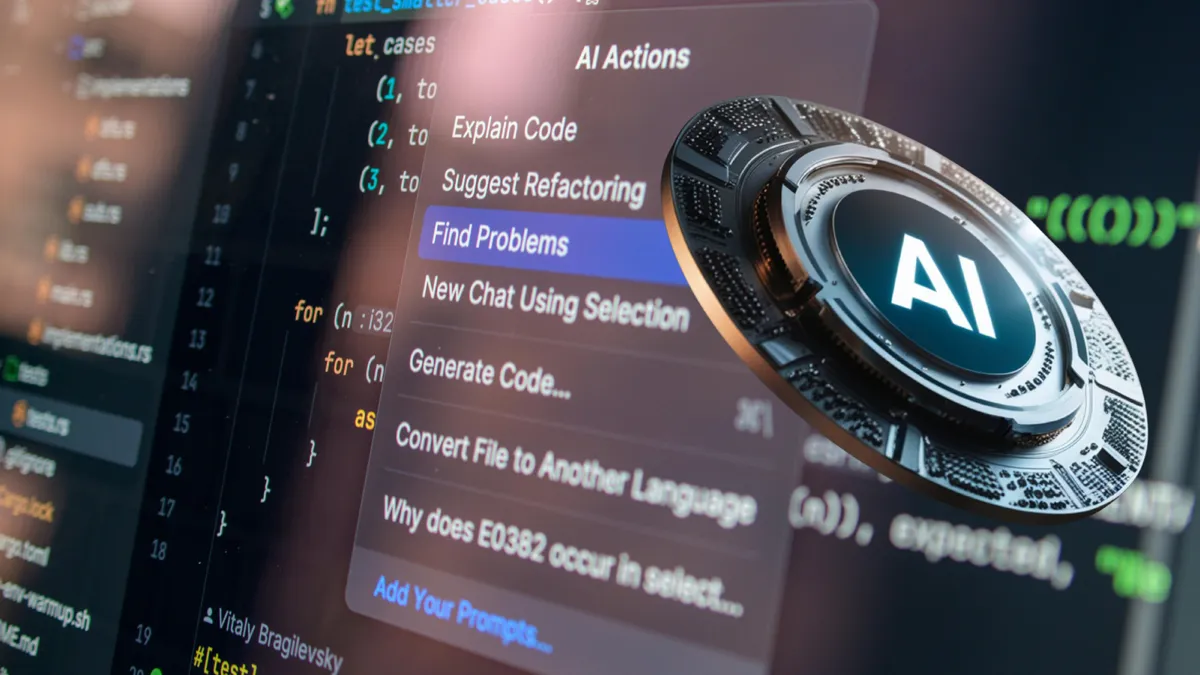
We are living through a major transformation: the shift from artificial intelligence that talks to artificial intelligence that operates. While the first generation of chatbots simply answered predefined questions, the new era of conversational AI marks a decisive step forward.
The challenge is no longer just to interact in natural language, but to enable these assistants to act concretely on your information systems. A chatbot that cannot act remains a gadget; connected to your tools, it becomes a lever for performance.
At Beebay, we design hybrid solutions that combine the understanding of LLMs (Large Language Models) with the rigorous orchestration of your business processes. Our mission is clear: turn the “enhanced FAQ” chatbot into a genuine operational copilot able to understand, search, summarise and, above all, carry out tasks on your behalf.
Beyond the chatbot: the assistant that acts
The first generation of enterprise chatbots simply answered predefined questions using rigid decision trees. Today, conversational AI is taking a decisive step forward thanks to two major developments:
Integration with collaboration tools: Microsoft Teams, Slack and other platforms become the single entry point to information systems. An employee can query a bot, receive a contextualised answer and trigger an action (sending an email, creating a ticket, updating the CRM) without leaving the conversation.
RAG (Retrieval-Augmented Generation) architecture: rather than relying solely on an LLM’s general knowledge, this approach anchors answers in a specific document base: the French General Tax Code, internal documentation, customer exchange history. The result? Precise, sourced and verifiable answers.
Orchestration with n8n: turning intent into action
An intelligent chatbot that cannot act remains a gadget. This is where n8n comes in: an open-source orchestration platform that converts an intent expressed in natural language into an executable workflow.
A Teams assistant developed in-house, combining n8n and OpenAI, automates concrete tasks: the user chats in natural language in Teams, and the orchestrator triggers the necessary actions in the background.
Use case: smart email sending
Example: “Send a summary of this conversation to the sales team”. The n8n workflow then runs through the following steps:
- The LLM analyses the intent and extracts the parameters (recipients, content).
- n8n summarises the content of the conversation.
- The email is structured according to company standards.
- A confirmation is requested in Teams.
- The email is sent via the Gmail API.
This complete loop — understanding, processing, confirmation, execution — takes you from a simple chatbot to an operational assistant, without leaving the Teams window.
A concrete case: a legal assistant with RAG
For one of our latest internal projects, we developed a chatbot for a company working in the legal field, based on a RAG architecture. The challenge was not simply to “connect ChatGPT to a database”, but to put in place a system able to split legal texts intelligently to allow relevant semantic search, to handle the hierarchy of sources (law > circulars > case law), to produce comprehensive answers with exact references, and to redirect to a human expert when necessary.
This architecture relies on a combination of technologies: vector embeddings for semantic search, ChromaDB for storage, and LLM orchestration via LangChain.
Technical challenges not to underestimate
Behind the apparent simplicity of a conversation lie complex issues:
-
Chunking quality: how do you split a 500-page document so that each fragment stays coherent? Poor splitting produces incomplete or out-of-context answers.
-
Handling hallucinations: LLMs can invent information. In a legal context, that is unacceptable. RAG reduces this risk.
-
Authentication and security: connecting a chatbot to sensitive systems requires rigorous management of permissions and OAuth tokens — a challenge we had to address during the Teams/Gmail integration.
-
Cost and latency: every request to an LLM has a cost. Optimising the number of calls while maintaining quality is a delicate balance.
Democratising expertise
The ultimate aim of these assistants goes beyond automation. It is about democratising access to expertise within organisations. An employee who has just joined the company, for example, can query a legal chatbot and get an expert-quality answer, sourced and contextualised. A sales rep can trigger a complex workflow with a single sentence in Teams… This transformation does not replace human expertise; it amplifies it and makes it accessible across the organisation.
Our approach at Beebay
We design these solutions with one conviction: conversational AI only has value if it fits perfectly into the existing ecosystem. This requires mastery of both LLM/RAG technologies and integration architectures, whether orchestration with n8n, iPaaS platforms or APIs.